2015 Paris / Salzburg Lexicon
Lexicon
The people, places and crafts behind the objects of this hall
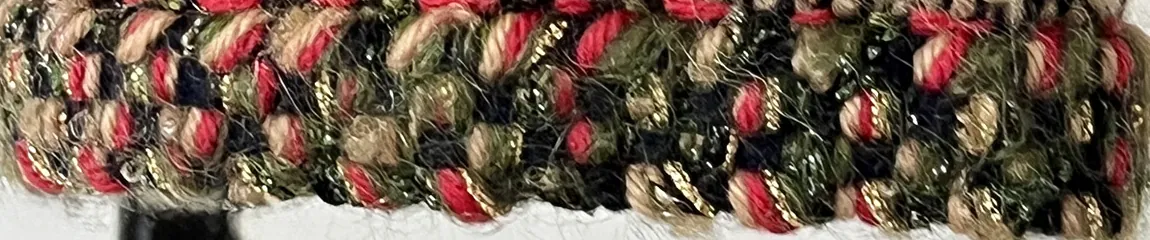
Braid
A twisted or woven trim sewn along an edge. On Tracht it borders the jacket; at Chanel it has framed the jacket since the 1950s.
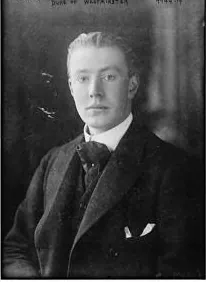
Duke of Westminster
Hugh Grosvenor, 2nd Duke, known as "Bendor" (1879–1953), among the richest men in Europe. Chanel's companion in the 1920s, he took her stalking and fishing in Scotland, and she took his tweeds.
Bain News Service, c. 1915 · Library of Congress, public domain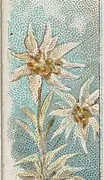
Edelweiss
The white, woolly star of the high Alps, the best known of the Alpine flowers: embroidered on Tracht, pinned to hats, worn as a badge by mountain troops.
Allen & Ginter, Chamois card, 1890 (detail) · The Met, public domain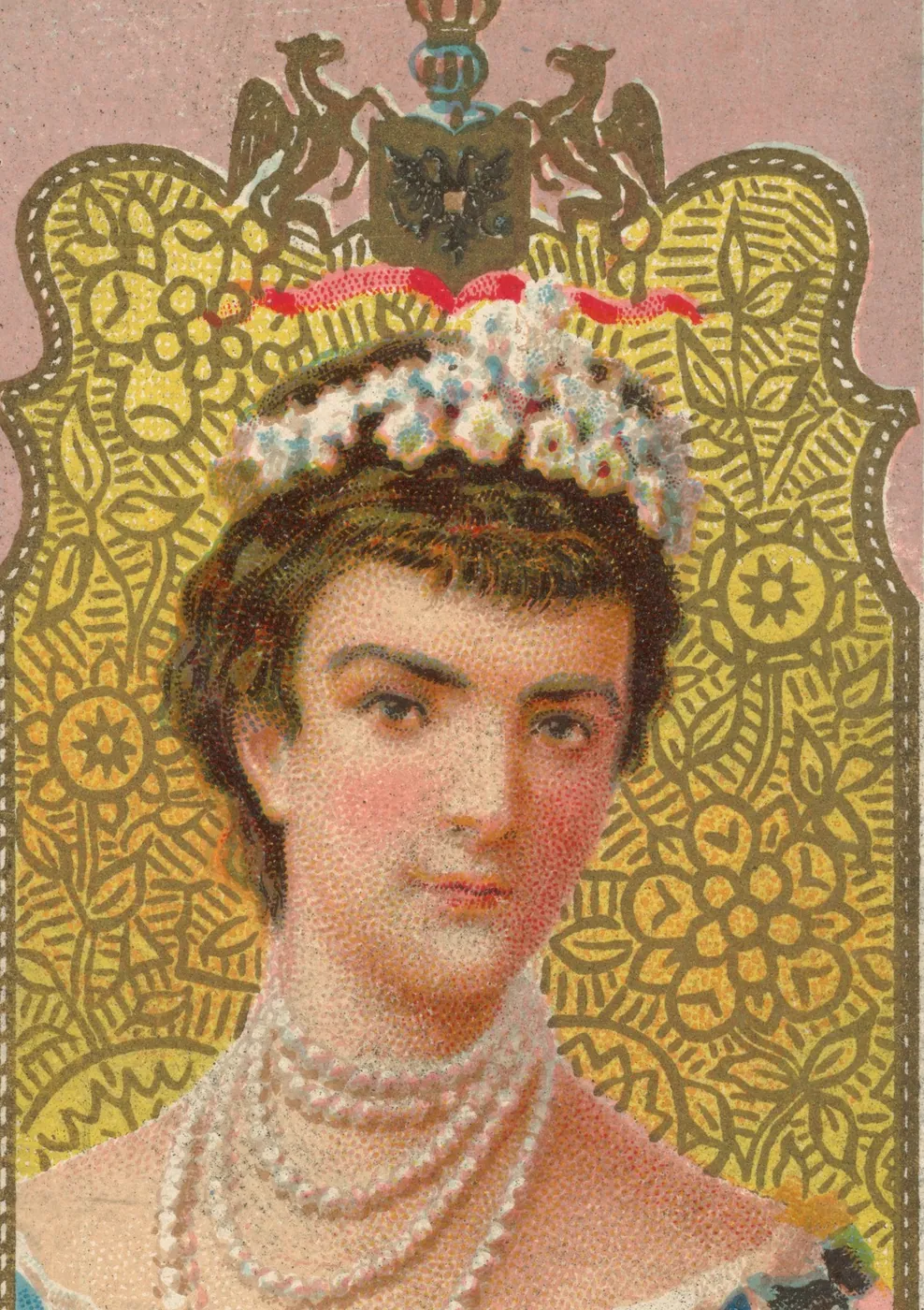
Empress Elisabeth
"Sissi" (1837–1898), Empress of Austria, famous for her beauty, her riding and the diamond stars in her hair. Lagerfeld's imperial muse for Paris–Salzburg; in his film she is played by Cara Delevingne.
Allen & Ginter, Empress of Austria, 1889 · The Met, public domain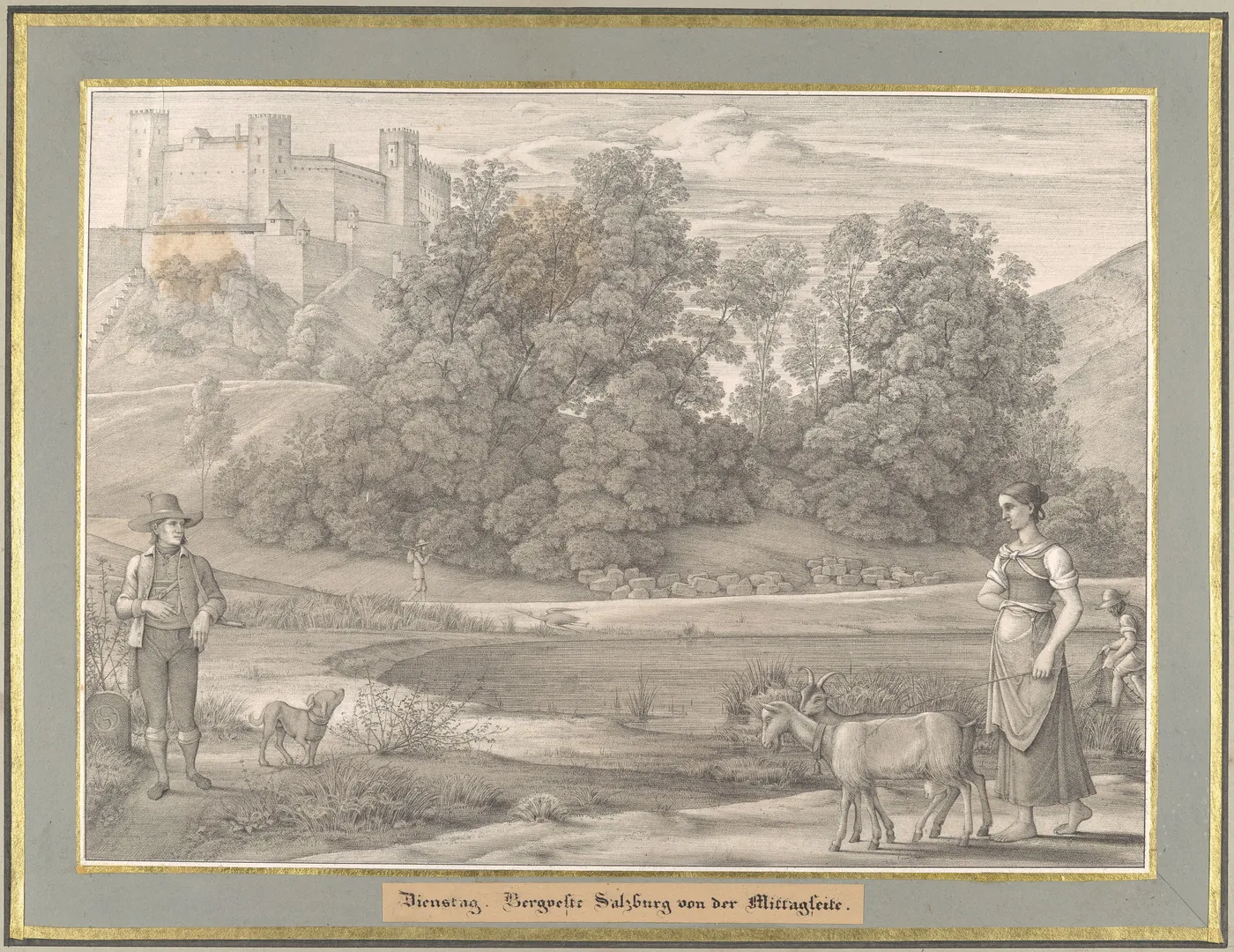
Ferdinand Olivier
German Romantic painter (1785–1841). In 1823 he published seven views of Salzburg and Berchtesgaden, one for each day of the week, peopled with farmers in Tracht.
Ferdinand Olivier, 1823 · The Met, public domain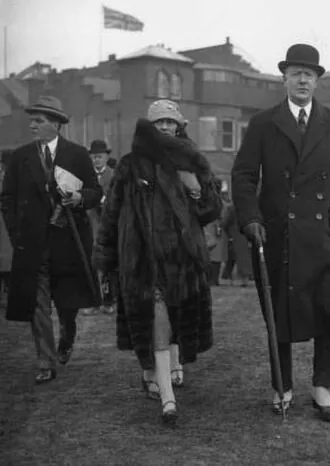
Gabrielle Chanel
1883–1971. Here with the Duke of Westminster at Aintree in 1925, the years she spent in his tweeds.
Aintree, 27 March 1925 · public domain, via Wikimedia Commons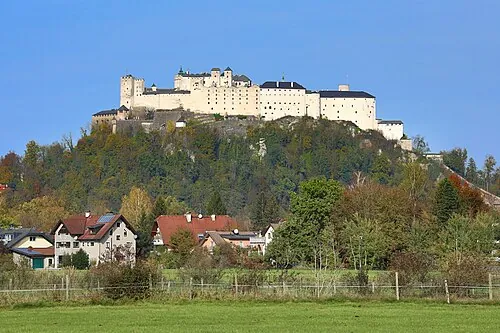
Hohensalzburg
The fortress over the town, begun in 1077 and one of the largest medieval castles in Europe. Every view of Salzburg, Olivier's included, is built around it.
Photo C. Stadler/Bwag, CC BY-SA 4.0, via Wikimedia Commons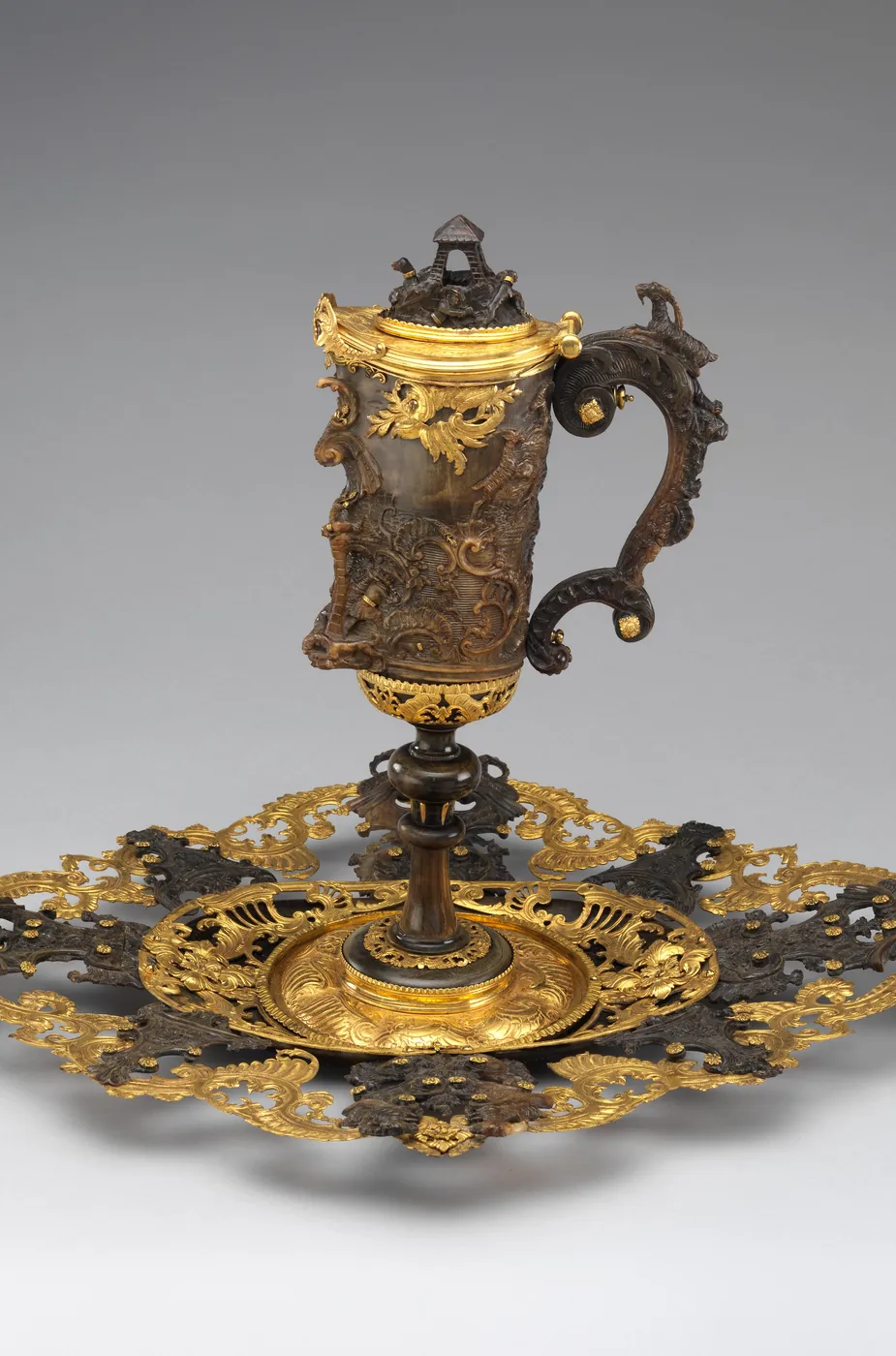
Ibex horn
The curved horn of the Alpine ibex, the wild goat of the high rock. Carved and mounted in gold, it made hunting trophies fit for a princely table.
Martin Gizl, 1758 · The Met, public domain
Karl Lagerfeld
Creative director of Chanel from 1983 until his death in 2019. He liked to take the House abroad for Métiers d'Art and to tell its history back to it, with a twist.
Photo Christopher William Adach, 2014, CC BY-SA 2.0, via Wikimedia CommonsLanz
Salzburg's Tracht house, founded in 1922, the same year as the Salzburg Festival.
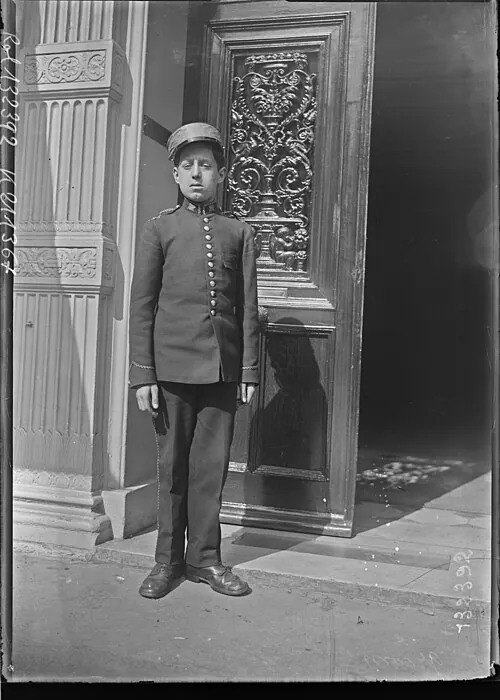
Lift attendant
In the grand hotels of the 1950s, the young man who ran the lift: a short, fitted jacket with a stand collar, a row of buttons, sometimes braid. Chanel's film gives him the credit for her jacket.
Agence Rol, Paris, 1928 · BnF Gallica, public domain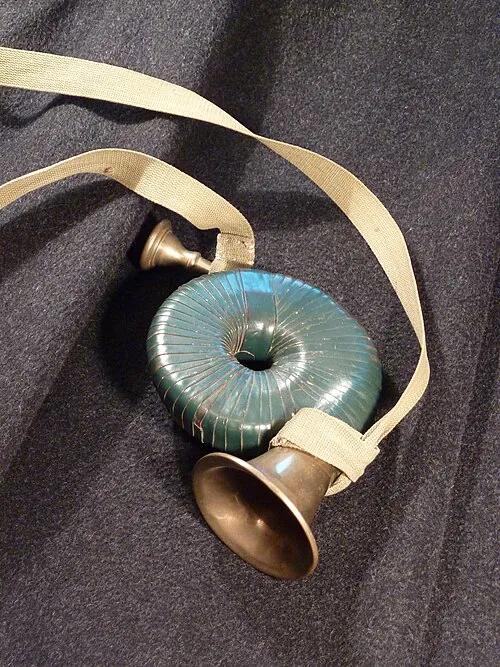
Loden
Dense felted wool from the Alps, traditionally green or grey, worn by hunters because it sheds rain and wind and makes no sound in the forest.
Photo Frank Behnsen, CC BY-SA 3.0, via Wikimedia Commons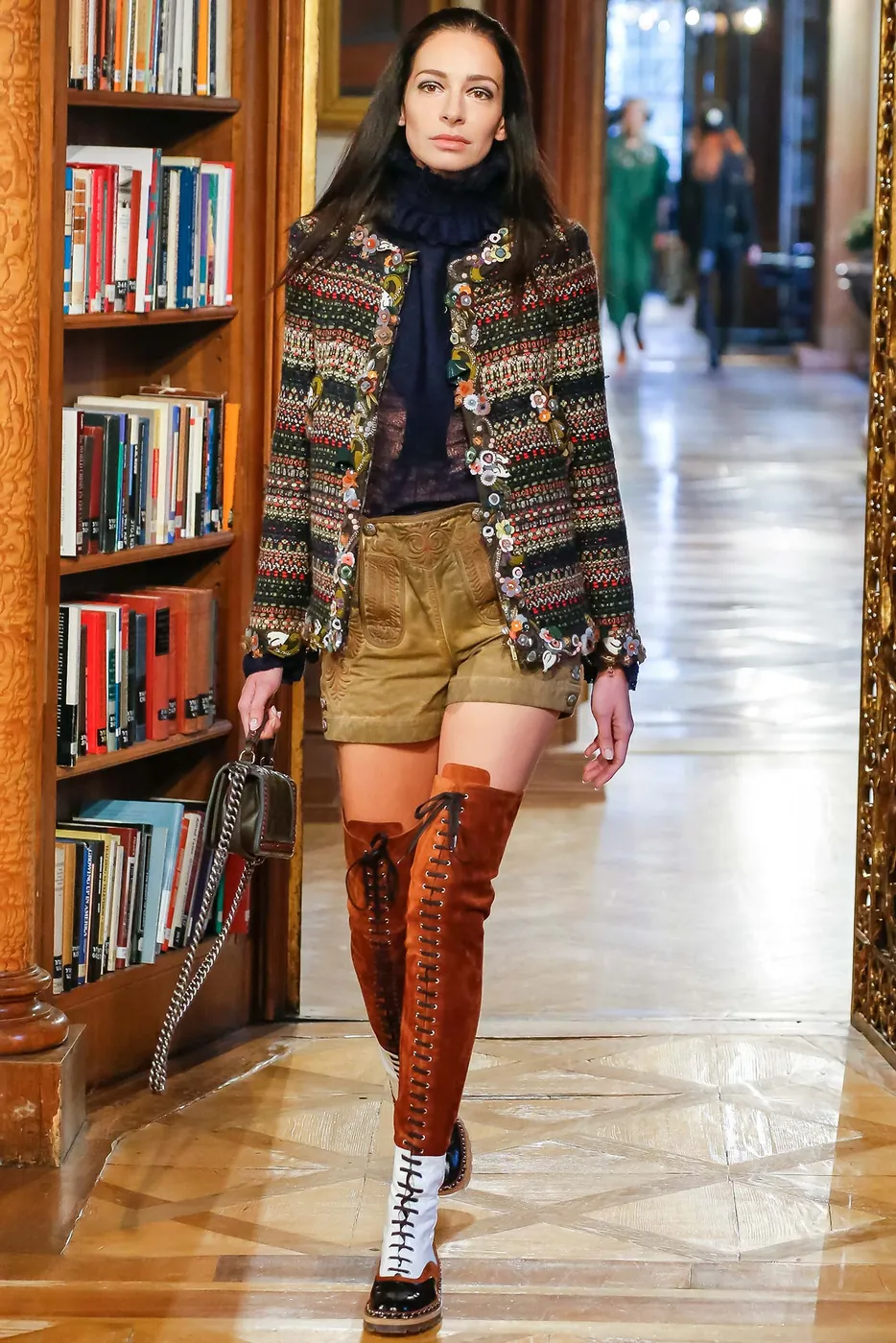
Métiers d'Art
Chanel's yearly collection made with the specialist ateliers it owns, shown each December. 2014's was Paris–Salzburg, sold as Pre-Fall 2015.
Press photograph, CastaliaLux archive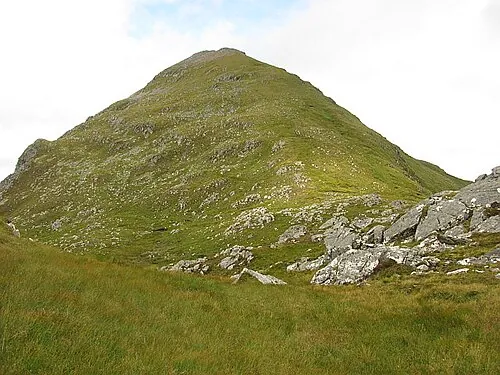
Reay Forest
The Duke's deer forest in Sutherland, at the far north-west of Scotland: bare hills, lochs, red deer. Two of its mountains, Arkle and Foinaven, later lent their names to the family's racehorses.
Ben Stack, Reay Forest · photo Richard Webb, CC BY-SA 2.0, via Wikimedia Commons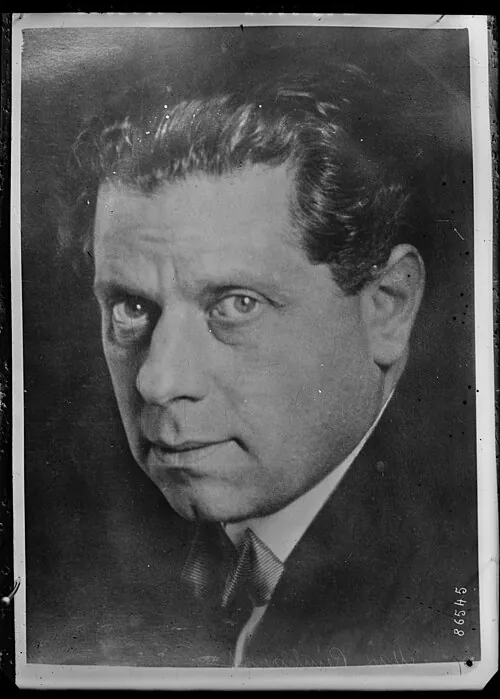
Salzburg Festival
Founded in 1920 by Max Reinhardt, Hugo von Hofmannsthal and Richard Strauss. It still opens each summer with Jedermann played on the cathedral square.
Max Reinhardt, 1923 · BnF Gallica, public domain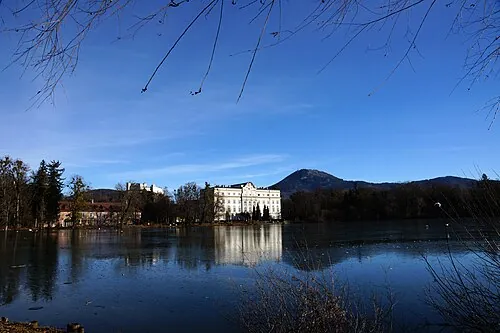
Schloss Leopoldskron
A rococo palace on its own lake at the edge of Salzburg, built from 1736 for Prince-Archbishop Leopold Anton Firmian. From 1918 it was the home of Max Reinhardt; in 1965 its lakeside terrace played the von Trapp villa in The Sound of Music.
Photo Bede735, CC BY-SA 4.0, via Wikimedia Commons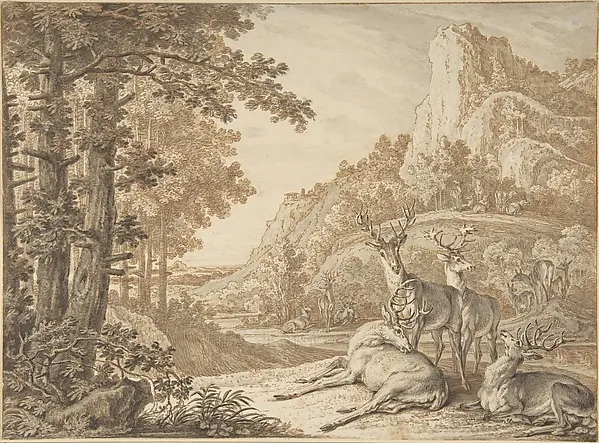
Stag
The red deer stag, crown of the Alpine hunt. Its antlers hang on every lodge wall; Ridinger spent a career drawing it.
Johann Elias Ridinger, Stags in a Landscape · The Met, public domain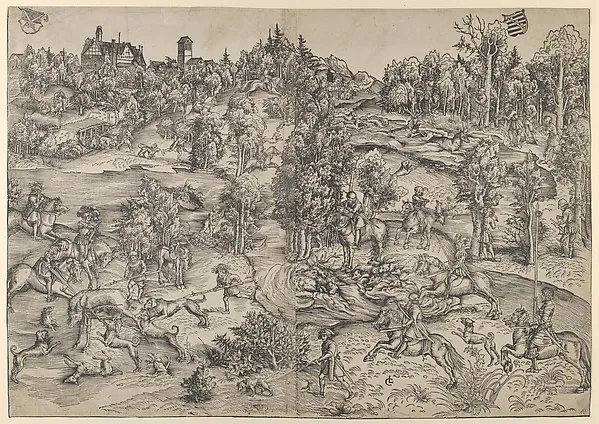
The hunt
In the Alpine and German lands the stag hunt was a princely art, drawn and engraved for five centuries. Cranach cut this one in 1506.
Lucas Cranach the Elder, The Stag-Hunt, 1506 · The Met, public domain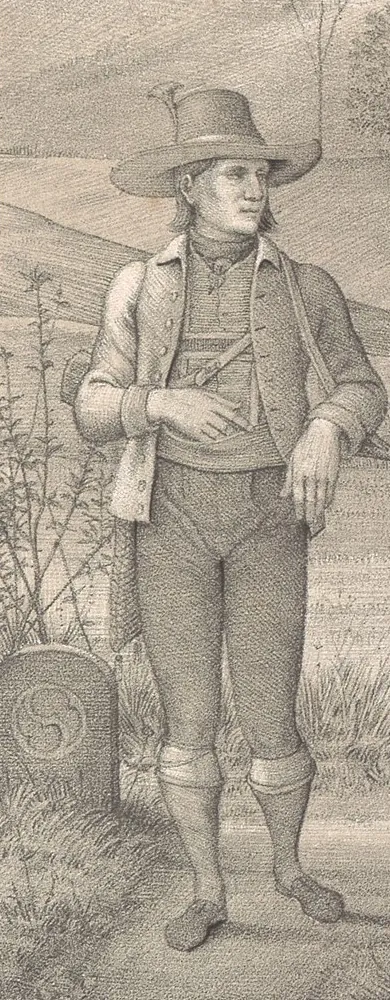
Tracht
Traditional dress of the Alpine regions of Austria and Bavaria: dirndls, loden jackets, embroidered bodices, worn for feast days and, increasingly, as fashion.
Ferdinand Olivier, 1823 · The Met, public domain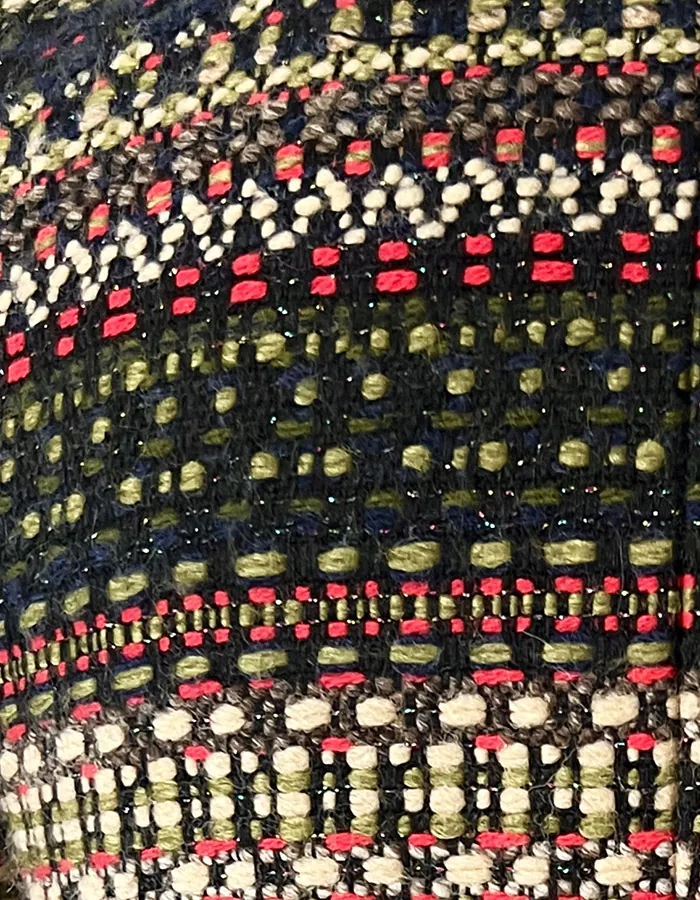
Tweed
Rough woollen cloth from the Scottish Borders, made for country and sporting clothes. Chanel took it from the men's wardrobe into couture, and the House has woven it ever since.
Tyrolean hat
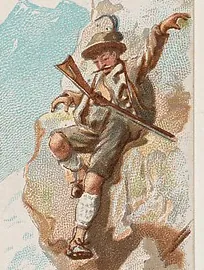
Green felt or loden, a cord round the crown, a feather or a Gamsbart, the tuft of chamois hair a hunter wears as a trophy.
Allen & Ginter, Chamois, 1890 · The Met, public domain